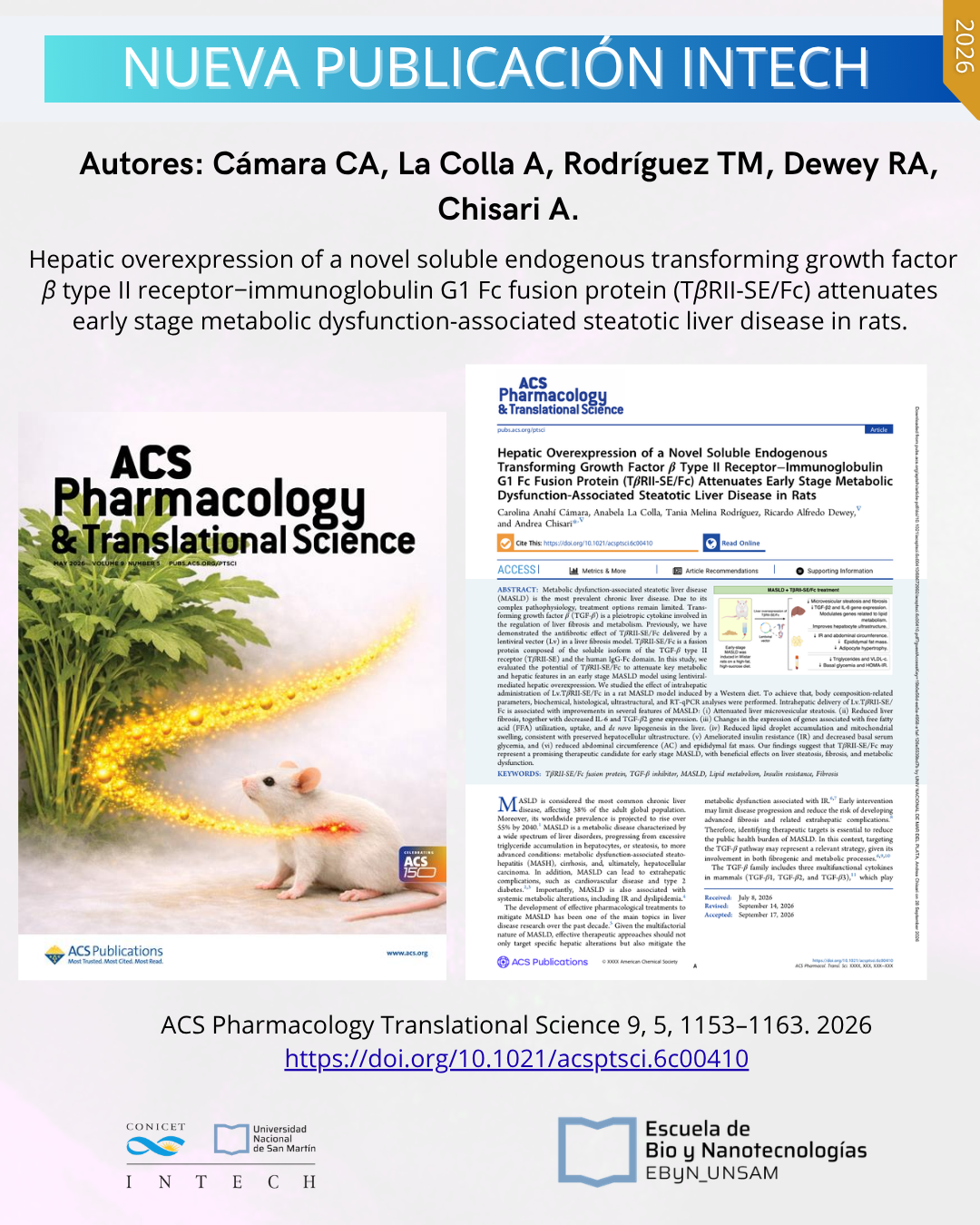
Transforming growth factor β (TGF-β) is a pleiotropic cytokine involved in the regulation of liver fibrosis and metabolism. Previously, we have demonstrated the antifibrotic effect of TβRII-SE/Fc delivered by a lentiviral vector (Lv) in a liver fibrosis model. TβRII-SE/Fc is a fusion protein composed of the soluble isoform of the TGF-β type II receptor (TβRII-SE) and the human IgG-Fc domain. In this study, we evaluated the potential of TβRII-SE/Fc to attenuate key metabolic and hepatic features in an early stage MASLD model using lentiviralmediated hepatic overexpression. We studied the effect of intrahepatic administration of Lv.TβRII-SE/Fc in a rat MASLD model induced by a Western diet. To achieve that, body composition-related parameters, biochemical, histological, ultrastructural, and RT-qPCR analyses were performed. Intrahepatic delivery of Lv.TβRII-SE/Fc is associated with improvements in several features of MASLD: (i) Attenuated liver microvesicular steatosis. (ii) Reduced liver
fibrosis, together with decreased IL-6 and TGF-β2 gene expression. (iii) Changes in the expression of genes associated with free fatty acid (FFA) utilization, uptake, and de novo lipogenesis in the liver. (iv) Reduced lipid droplet accumulation and mitochondrial swelling, consistent with preserved hepatocellular ultrastructure. (v) Ameliorated insulin resistance (IR) and decreased basal serum glycemia, and (vi) reduced abdominal circumference (AC) and epididymal fat mass. Our findings suggest that TβRII-SE/Fc may represent a promising therapeutic candidate for early stage MASLD, with beneficial effects on liver steatosis, fibrosis, and metabolic dysfunction.