Journal of Soil Science and Plant Nutrition 26, 7307 - 7320. 2026.
New publication: Zn-solubilizing Yeast from Rice Rhizosphere as a Bioinoculant Candidates Under Combined Stresses
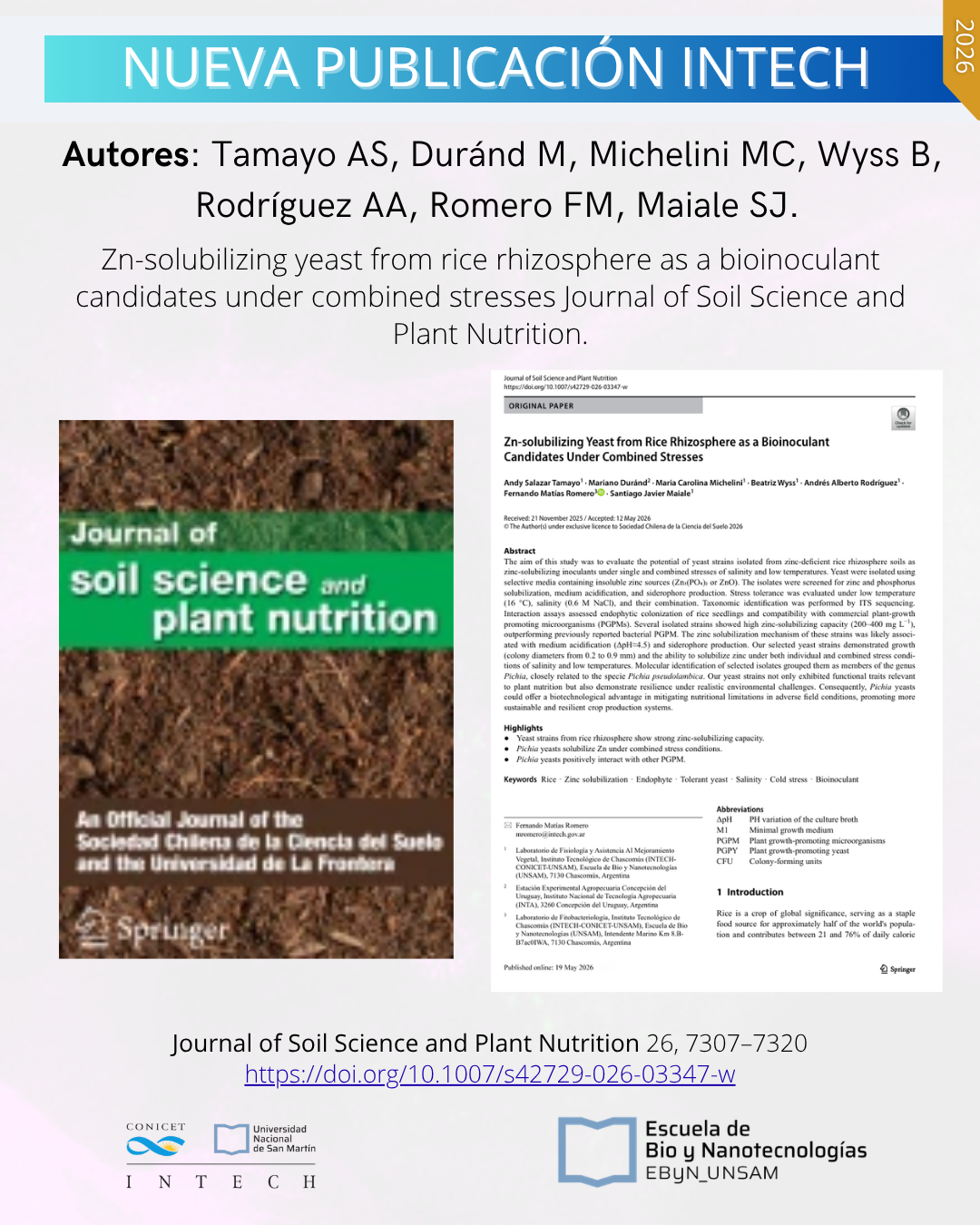
The aim of this study was to evaluate the potential of yeast strains isolated from zinc-deficient rice rhizosphere soils as zinc-solubilizing inoculants under single and combined stresses of salinity and low temperatures. Yeast were isolated using selective media containing insoluble zinc sources (Zn₃(PO₄)₂ or ZnO). The isolates were screened for zinc and phosphorus solubilization, medium acidification, and siderophore production. Stress tolerance was evaluated under low temperature (16 °C), salinity (0.6 M NaCl), and their combination. Taxonomic identification was performed by ITS sequencing. Interaction assays assessed endophytic colonization of rice seedlings and compatibility with commercial plant-growth promoting microorganisms (PGPMs). Several isolated strains showed high zinc-solubilizing capacity (200–400 mg L−1), outperforming previously reported bacterial PGPM. The zinc solubilization mechanism of these strains was likely associated with medium acidification (ΔpH≈4.5) and siderophore production. Our selected yeast strains demonstrated growth (colony diameters from 0.2 to 0.9 mm) and the ability to solubilize zinc under both individual and combined stress conditions of salinity and low temperatures. Molecular identification of selected isolates grouped them as members of the genus Pichia, closely related to the specie Pichia pseudolambica. Our yeast strains not only exhibited functional traits relevant to plant nutrition but also demonstrate resilience under realistic environmental challenges. Consequently, Pichia yeasts could offer a biotechnological advantage in mitigating nutritional limitations in adverse field conditions, promoting more sustainable and resilient crop production systems.