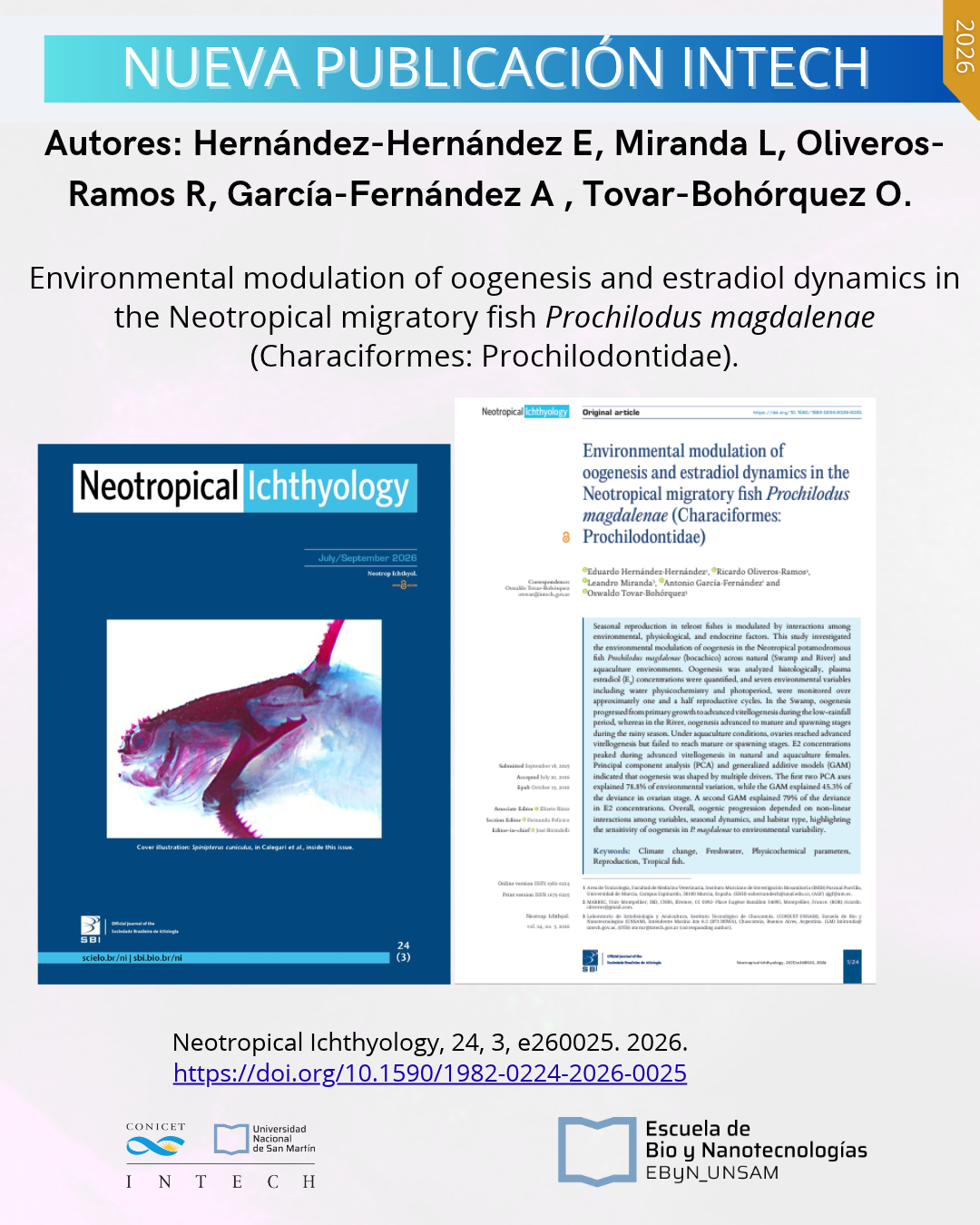
Neotropical Ichthyology, 24, 3, e260025. 2026.
New publication: Environmental modulation of oogenesis and estradiol dynamics in the Neotropical migratory fish Prochilodus magdalenae (Characiformes: Prochilodontidae).
Seasonal reproduction in teleost fishes is modulated by interactions among environmental, physiological, and endocrine factors. This study investigated the environmental modulation of oogenesis in the Neotropical potamodromous fish Prochilodus magdalenae (bocachico) across natural (Swamp and River) and aquaculture environments. Oogenesis was analyzed histologically, plasma estradiol (E2) concentrations were quantified, and seven environmental variables including water physicochemistry and photoperiod, were monitored over approximately one and a half reproductive cycles. In the Swamp, oogenesis progressed from primary growth to advanced vitellogenesis during the low-rainfall period, whereas in the River, oogenesis advanced to mature and spawning stages during the rainy season. Under aquaculture conditions, ovaries reached advanced vitellogenesis but failed to reach mature or spawning stages. E2 concentrations peaked during advanced vitellogenesis in natural and aquaculture females. Principal component analysis (PCA) and generalized additive models (GAM) indicated that oogenesis was shaped by multiple drivers. The first two PCA axes explained 78.8% of environmental variation, while the GAM explained 45.3% of the deviance in ovarian stage. A second GAM explained 79% of the deviance in E2 concentrations. Overall, oogenic progression depended on non-linear interactions among variables, seasonal dynamics, and habitat type, highlighting the sensitivity of oogenesis in P. magdalenae to environmental variability.